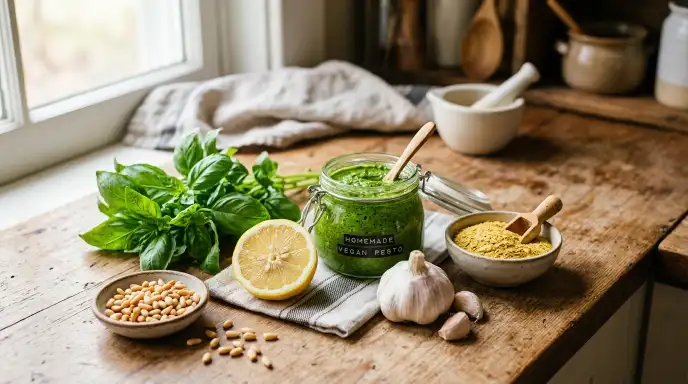
If you’ve been searching for a vegan pesto recipe that actually tastes rich, creamy, and satisfying you just found it.
This recipe is perfect for anyone going dairy-free, plant-based, or simply trying to eat a little cleaner without sacrificing flavor.
It comes together in under 10 minutes, and honestly? It might become your new weekly staple.
The Best Vegan Pesto Recipe
Recipe Overview
| Detail | Value |
| COURSE | Sauce / Condiment |
| CUISINE | Italian-Inspired, American |
| DIFFICULTY | Easy |
| SERVINGS | 6 servings |
| PREPARATION TIME | 10 minutes |
| COOKING TIME | 0 minutes |
| CALORIES | ~180 per serving |
For another versatile vegan staple, check out this creamy vegan mayo recipe that works well in countless dishes.
Equipment Needed
- Food processor or high-speed blender
- Measuring cups and spoons
- Rubber spatula (for scraping down the sides)
- Small skillet (if toasting pine nuts)
- Airtight glass jar for storing
- Citrus juicer (optional but handy)
- Knife and cutting board
Ingredients
For the Vegan Pesto:
- 2 cups fresh basil leaves, packed (stems removed)
- 3 cloves garlic, peeled
- ⅓ cup pine nuts (toasted for extra flavor)
- ¼ cup nutritional yeast (this is your dairy-free “parmesan” — don’t skip it!)
- ½ cup extra virgin olive oil
- 2 tablespoons fresh lemon juice
- ½ teaspoon salt (adjust to taste)
- ¼ teaspoon black pepper
- 2–3 tablespoons water (to adjust consistency)
Optional Add-Ins / Substitutions:
- No pine nuts? Use walnuts, cashews, almonds, or sunflower seeds
- No nutritional yeast? Add a tablespoon of white miso paste for umami depth
- Want a nut-free version? Use pumpkin seeds or hemp seeds instead
- Want a twist? Replace half the basil with baby spinach or arugula
- Extra creamy version? Add half a small ripe avocado
Step-by-Step Instructions
Step 1: Toast your pine nuts first.
Add the pine nuts to a dry skillet over medium heat.
Toast them for 2–3 minutes, stirring frequently, until they turn golden and smell nutty.
Remove from heat and let them cool — trust me, this tiny step makes a BIG difference in flavor.
Step 2: Prep your basil.
Rinse the fresh basil leaves under cold water and pat them dry gently.
Remove any thick stems, as they can make the sauce slightly bitter.
Step 3: Add garlic to the food processor.
Drop the peeled garlic cloves into your food processor.
Pulse them 4–5 times until roughly chopped — this prevents big raw garlic chunks in your finished pesto.
Step 4: Add the pine nuts.
Toss in the cooled, toasted pine nuts.
Pulse again a few times until you get a rough, crumbly texture.
Step 5: Add the fresh basil.
Now pile in those gorgeous green basil leaves.
Don’t be shy — they’ll wilt down once blended.
Step 6: Add nutritional yeast, salt, and pepper.
Sprinkle in the nutritional yeast, salt, and black pepper.
This is where your vegan pesto recipe really starts coming together — the nutritional yeast gives it that savory, cheesy depth you’d normally get from parmesan.
Step 7: Squeeze in the lemon juice.
Add the fresh lemon juice directly into the processor.
Lemon brightens every single flavor in this sauce — it’s non-negotiable in my kitchen.
Step 8: Start blending.
Put the lid on and blend everything on low speed first.
Scrape down the sides with your rubber spatula as needed.
Step 9: Drizzle in the olive oil slowly.
With the processor running, slowly pour in the extra virgin olive oil.
This creates that beautiful, silky emulsification — pour slowly, not all at once.
Step 10: Check the consistency.
Stop and taste your pesto.
If it feels too thick, add water one tablespoon at a time and blend again until you hit the perfect saucy texture.
Step 11: Final taste test and adjust.
This is my favorite step — grab a spoon and taste!
Add more salt, lemon juice, or nutritional yeast until it tastes absolutely perfect to you.
Step 12: Store or serve immediately.
Transfer your gorgeous vegan pesto to a clean glass jar.
Drizzle a thin layer of olive oil on top before sealing — this keeps it bright green and fresh in the fridge for up to 5 days.
Pro Tip: Want to freeze it? Spoon this vegan pesto recipe into an ice cube tray, freeze, then transfer cubes to a zip-lock bag — perfect single-serve portions anytime!
Ideas for Serving
- Toss with pasta — Mix into hot spaghetti, penne, or gnocchi for a quick weeknight dinner
- Use as a pizza base — Spread on flatbread or pizza dough instead of tomato sauce
- Slather on sandwiches — Use as a spread on paninis, wraps, or toast for a flavor upgrade
- Drizzle over salads — A spoonful over roasted veggie bowls or grain salads works beautifully with this vegan pesto recipe
- Serve as a dip — Pair with crusty bread, crackers, or fresh-cut veggies for an easy appetizer
Nutrition Information
| Nutrient | Amount (Per Serving) |
| Calories | ~180 kcal |
| Protein | 3g |
| Fat | 17g |
| Carbs | 4g |
| Fiber | 1g |
| Sugar | 0g |
| Sodium | 200mg |
A quick note on nutrition:
Most of the fat in this recipe comes from olive oil and pine nuts — both are heart-healthy unsaturated fats.
Nutritional yeast brings in a small but meaningful boost of B vitamins, including B12 if you use a fortified variety.
Fresh basil is loaded with antioxidants and anti-inflammatory compounds.
Overall, this is a nutrient-dense, wholesome sauce you can feel genuinely good about eating.
Common Mistakes to Avoid
- Using dried basil instead of fresh — Dried basil will give you a dull, flat-tasting pesto; always go fresh
- Skipping the nutritional yeast — This is what gives dairy-free pesto its savory, cheesy flavor profile; don’t leave it out
- Adding oil too fast — Dumping all the oil in at once can make your pesto greasy and separated; always drizzle it in slowly
- Over-blending the sauce — Pesto should have a little texture; blend until combined but stop before it becomes a completely smooth paste
- Not tasting as you go — Every batch of basil tastes slightly different; always adjust seasoning before you call it done
- Storing without an olive oil seal — Without that thin oil layer on top, your pesto will oxidize quickly and turn an unappetizing dark color
Conclusion
Making homemade pesto honestly feels like a little act of self-care — it’s fast, it smells incredible, and the result is SO much better than anything from a jar.
This vegan pesto recipe has genuinely changed the way I cook weeknight dinners.
I always keep a batch in the fridge now, ready to rescue boring pasta, sad sandwiches, or a last-minute appetizer situation.
Whether you’re fully plant-based or just curious about dairy-free cooking, this recipe is a great starting point.
Give it a try this week — I’m almost certain it’ll earn a permanent spot in your kitchen rotation.
Happy blending! 💚
FAQs
Can I make this vegan pesto recipe without a food processor?
Yes! A high-speed blender works perfectly.
You can also use a mortar and pestle for a more rustic, old-school texture — it just takes a little more arm work.
How long does homemade vegan pesto last?
Stored in an airtight jar with an olive oil seal on top, it stays fresh in the fridge for up to 5 days.
For longer storage, freeze it in ice cube trays for up to 3 months.
Is nutritional yeast necessary for a vegan pesto recipe?
It’s highly recommended because it creates that cheesy, savory flavor traditionally from parmesan.
If you don’t have it, white miso paste is a great umami-rich substitute.
Can I use different nuts or seeds in vegan pesto?
Absolutely — walnuts, cashews, almonds, and even sunflower or pumpkin seeds all work wonderfully.
Each nut gives a slightly different flavor and texture, so feel free to experiment based on what you have.
Why does my pesto turn dark green or brown?
Oxidation is the culprit — the basil reacts with air after blending.
Always drizzle olive oil on top before sealing your jar, and try to use it within a few days for the brightest, most vibrant color and freshest flavor.